Showing posts with label dark shadows. Show all posts
Wednesday, November 20, 2013
Burton, Keaton, Ryder in Talks for "Beetlejuice 2"
Is it "showtime" again for Beetlejuice?
Sources have told Variety that Tim Burton is in talks to direct a sequel to his 1988 comedy, Beetlejuice. Seth Grahame Smith (Dark Shadows, Abraham Lincoln: Vampire Hunter) penned the script and will produce with his partner David Katzenberg through their KatzSmith Productions.
Burton rarely does sequels (his only sequel has been Batman Returns), but perhaps he's interested in revisiting one of his favorite film characters. Vital to this is that Michael Keaton is interested in reprising his leading ghoulish role, having told NME.com that the sequel is "a go."
Additionally, Winona Ryder might be reprising her character. The actress recently told The Daily Beast that the long-gestating sequel "might be happening."
Burton, of course, is quite busy. The filmmaker is also eyeing his Fox project, Miss Peregrine's Home for Peculiar Children, with one source saying it could possibly go before Beetlejuice 2. Also, he is in production on his latest feature, Big Eyes.
More information will be announced in the near future, so stay tuned!
Labels:
abraham lincoln: vampire hunter,
batman returns,
beetlejuice,
beetlejuice 2,
big eyes,
dark shadows,
david katzenberg,
michael keaton,
peregrine's home for peculiars,
seth grahame-smith,
tim burton,
winona ryder
Monday, July 15, 2013
New Poll: Which Future Tim Burton Film Do You Most Want to See?
We have a new poll: "Which Future Tim Burton Film Do You Most Want to See?"
• Big Eyes
• Peregrine's Home for Peculiars
It should be noted that Tim Burton is merely attached to direct Peregrine's Home for Peculiars, and not confirmed to be helming that project just set. There are also other films that he might be associated with, but those are simply in development (and might be included in future polls once more details arise!).
Feel free to discuss in the comments section below!
Here are the results from our previous poll, "Which 2012 Tim Burton Film Was Your Favorite?":
35 votes (7%) for Abraham Lincoln: Vampire Hunter
142 votes (31%) for Dark Shadows
272 votes (60%) for Frankenweenie
Total number of votes: 449
Labels:
abraham lincoln: vampire hunter,
big eyes,
dark shadows,
frankenweenie,
peregrine's home for peculiars,
poll
Thursday, February 14, 2013
New Poll: Which 2012 Tim Burton Movie Was Your Favorite?

We have a new poll for you to vote in! Our question: "Which 2012 Tim Burton Movie Was Your Favorite?"
Vote for either:
Abraham Lincoln: Vampire Hunter
Dark Shadows
Frankenweenie
Feel free to tell us more in the comments section below! We look forward to the results.
Also, here are the results from our previous poll, which asked: "Which 2012 Tim Burton Movies Did You See" We received 252 votes.
104 people (41%) saw Abraham Lincoln: Vampire Hunter
228 people (90%) saw Dark Shadows
199 people (78%) saw Frankenweenie
Friday, November 30, 2012
New Poll: Which 2012 Burton Movies Did You See?
We have a new poll for you to vote in! Our question: "Which 2012 Tim Burton Movies Did You See?" This question is multiple choice, just in case you want to add a Burton movie that, for example, you might catch in theaters or on DVD in the near future while this poll is still open.
Our options are:
Abraham Lincoln: Vampire Hunter
Dark Shadows
Frankenweenie
Feel free to tell us more in the comments section below! We look forward to the results.
Also, here are the results from our previous poll, which asked: "ARE YOU EXCITED FOR KAREN O'S SONG FOR FRANKENWEENIE?" 197 people voted total.
32 people (16%) said, "Yes! I am a fan of Karen O and I'm excited for this song."
26 people (13%) said, "Yes. It's nice to have some songs during the end credits instead of film score."
12 people (6%) said, "Yes. I've changed my mind since hearing the song."
4 people (2%) said, "No. I've changed my mind since hearing the song."
93 people (47%) said, "No. I prefer to hear Danny Elfman's music during the end credits."
5 people (2%) said, "No. I am not a fan of Karen O's music."
25 people (12%) said, "I have no opinion on the matter."
Our options are:
Abraham Lincoln: Vampire Hunter
Dark Shadows
Frankenweenie
Feel free to tell us more in the comments section below! We look forward to the results.
Also, here are the results from our previous poll, which asked: "ARE YOU EXCITED FOR KAREN O'S SONG FOR FRANKENWEENIE?" 197 people voted total.
32 people (16%) said, "Yes! I am a fan of Karen O and I'm excited for this song."
26 people (13%) said, "Yes. It's nice to have some songs during the end credits instead of film score."
12 people (6%) said, "Yes. I've changed my mind since hearing the song."
4 people (2%) said, "No. I've changed my mind since hearing the song."
93 people (47%) said, "No. I prefer to hear Danny Elfman's music during the end credits."
5 people (2%) said, "No. I am not a fan of Karen O's music."
25 people (12%) said, "I have no opinion on the matter."
Sunday, September 16, 2012
"Dark Shadows: The Visual Companion" Signed by Tim Burton
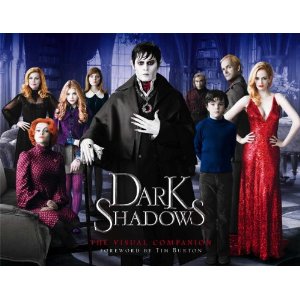
Forbidden Planet is offering a limited edition hardcover version of the new art book, "Dark Shadows: The Visual Companion," signed by Tim Burton. The book also features a foreword by Burton, is written by Mark Salisbury, and includes an afterword by the late producer of the film, Richard D. Zanuck.
Description: "Produced in close co-operation with Tim Burton and the production team, this lavish hardcover official companion volume to the film includes a Foreword by Tim Burton, scores of photos, concept drawings and production designs, and interviews with the cast and crew."
The book will not be available until November 4th, but you can pre-order it now for the online price of £75.00.
You can also order the standard hardcover edition of the book for £23.99 (retail price, £29.99), which will become available on October 26th.
Labels:
art,
book,
dark shadows,
mark salisbury,
richard d. zanuck,
tim burton
Wednesday, August 01, 2012
"Dark Shadows" DVD, Blu-Ray Release Date Announced
Dark Shadows will be made available on DVD, Blu-ray, and digital download formats on October 2nd, 2012, reports IGN.com. Dark Shadows will come to Blu-ray presented in 1080p (1.78:1 aspect ratio), mixed in 5.1 DTS-HD Master Audio. The DVD will feature an anamorphic widescreen transfer with 5.1 Dolby Digital audio.
Extras on the Blu-ray will include the following:
-Maximum Movie Mode
-The Collinses: Every Family Has Its Demons
-Becoming Barnabas
-Welcome To Collinsport!
-Reliving a Decade
-Angelique: A Witch Scorned
-Alice Cooper Rocks Collinsport!
-Dark Shadowy Secrets
-A Melee of Monstrous Proportions
-Dark Shadows: The Legend Bites Back
-Six Deleted Scenes
-DVD Copy
-UltraViolet Cloud Streaming Digital Copy
The DVD will include an UltraViolet copy of the film as "The Collinses: Every Family Has Its Demons" Focus Point featurette.
Suggested retail price for the Blu-ray is $35.99. Amazon has this format available for pre-order for $25.19. SRP for the DVD is $28.98.
Sunday, July 15, 2012
Richard D. Zanuck, 1934-2012
Famed Hollywood producer Richard D. Zanuck died on the morning of Friday, July 13th, 2012 of a heart attack. He was 77 years old.
Zanuck produced numerous films, including Jaws, Driving Miss Daisy, and True Crime, among others.
Zanuck also served as producer on six of Tim Burton's films: Planet of the Apes (2001), Big Fish (2003), Charlie and the Chocolate Factory (2005), Sweeney Todd: The Demon Barber of Fleet Street (2007), Alice in Wonderland (2010), and Dark Shadows (2012).
You can read more about the working relationship of Tim Burton and Richard D. Zanuck that lasted over a decade in this article by clicking here.
Friday, July 13, 2012
New Poll: Did You See "Abraham Lincoln: Vampire Hunter"?
We have a new poll on the right-hand side of our blog. Our new question: Did you see Abraham Lincoln: Vampire Hunter? Vote today, and feel free to discuss in the comments section of this post!
Here are the results from our previous poll, which started on June 9th, 2012, "Which 2012 Tim Burton film are you most looking forward to seeing?" With a total of 258 votes, 45 people (17%) said Dark Shadows (because they hadn't seen it yet), 34 people (13%) said Abraham Lincoln: Vampire Hunter, and 179 people (69%) said Frankenweenie.
Stay tuned for more polls in the future!
Monday, June 25, 2012
Photos: Four New "Dark Shadows" Portraits
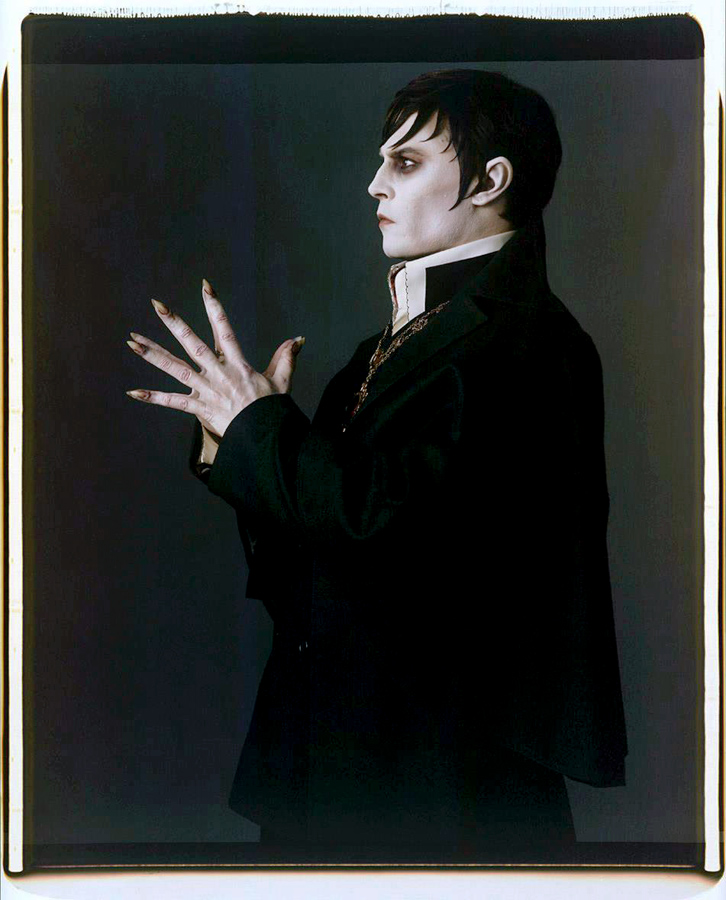
Dark Shadows News has posted four previously unseen Dark Shadows portraits, featuring Tim Burton, Johnny Depp, Bella Heathcoate, and Helena Bonham Carter. Click the images below to enlarge them:


Images © Warner Bros. Entertainment Ltd.


Images © Warner Bros. Entertainment Ltd.
Wednesday, June 20, 2012
Christopher Lee, Tom Kenny Join "Frankenweenie"

IMDb reports that 90-year-old, legendary actor Christopher Lee and prolific voice actor Tom Kenny (Spongebob SquarePants, The Powerpuff Girls, Adventure Time with Finn and Jake) are providing voices in Frankenweenie. Lee will be reprising his iconic vampire role as "Movie Dracula," while Kenny will play multiple parts, including a fire chief, a soldier, and various townsfolk.
This is Christopher Lee's sixth collaboration with Tim Burton. Previously, they have worked on Sleepy Hollow (1999), Charlie and the Chocolate Factory (2005), Corpse Bride (2005), Alice in Wonderland (2010), and Dark Shadows (2012). Lee was also going to have an appearance in Sweeney Todd: The Demon Barber of Fleet Street (2007) as the head ghost, until that part of the film was cut.

Sunday, June 10, 2012
"Dark Shadows" Box Office Results

Box Office Mojo has released information on the box office results for Dark Shadows. As of this weekend, the domestic U.S. gross of the film has been approximately $72.7 million. The film was released in the United States a month ago on May 11th. A further $120.5 million was accumulated overseas. Strong international performers include Japan ($18.6 million), France ($14.2 million), Russia ($11.1 million), the UK ($9.7 million), and Australia ($9.4 million). The film will likely pass the $200 million mark after opening in South America.
Labels:
Australia,
box office,
dark shadows,
France,
Japan,
Russia,
UK,
USA
Making the Opening Titles of "Dark Shadows"

Richard Morrison created the opening titles for Tim Burton's Dark Shadows. This was Morrison's third collaboration with the director, having previously worked on Batman (1989) and Sweeney Todd: The Demon Barber of Fleet Street (2007) with him.
A short article from the website Dexinger has words from Morrison, who explained how he used footage shot by Tim Burton himself to get a sense of the design of the opening titles, settling on the Benguiat typeface to set the mood.
"Tim shot this long sequence where Bella Heathcote, who plays a young nanny, is travelling on a train through the New England brownwoods," commented Richard Morrison. "It's a beautiful bit of footage that sweeps the audience from the landscape right into the compartment of the speeding train.
"After looking at different treatment, we decided to keep things really simple and work with type to evoke the mood. Benguiat has a lovely feel that's reminiscent of 70's TV shows. And together with the music score, we arrived at a very simple opening, but one that's quite unsettling, which captures the essence of the film."
Labels:
batman,
bella heathcoate,
dark shadows,
richard morrison,
sweeney todd,
tim burton
"Dark Shadows" Art Book Coming in November

An art book looking at the making of the motion picture, Dark Shadows, will be released on November 27th, 2012. Little is known about the book so far, which is titled, "Dark Shadows: The Art of the Film," and will include a foreword by Tim Burton, but you can pre-order it at Amazon.com.
Video: The Production Art of "Dark Shadows"
Warner Bros. has released this featurette examining the production art of Dark Shadows. Tim Burton, Johnny Depp, production designer Rick Heinrichs, associate producer Derek Frey, Eva Green, and makeup department head Joel Harlow look at how the visions of the various artists on the crew came together to create the film's aesthetic, from rough (and previously unseen) sketches by Burton to elaborate concept artwork.
Labels:
art,
dark shadows,
derek frey,
eva green,
joel harlow,
johnny depp,
rick heinrichs,
tim burton,
video
Thursday, May 17, 2012
Four New Behind-the-Scenes "Dark Shadows" Photos
The Dark Shadows News Page has posted four new images from behind the scenes of Dark Shadows. Click the photos below to enlarge them:
Video: Seth Grahame-Smith on "Dark Shadows," "Vampire Hunter"
Writer Seth Grahame-Smith joined Harry Knowles for a discussion on movie vampires and making Dark Shadows and Abraham Lincoln: Vampire Hunter with Tim Burton. They discuss writing for different characters, researching and adapting the source material, and the ultimate showdown: Barnabas Collins vs. Honest Abe. Grahame-Smith appears at about three minutes in:
Labels:
abraham lincoln: vampire hunter,
batman,
christopher lee,
danny elfman,
dark shadows,
edward scissorhands,
johnny depp,
pee-wee's big adventure,
seth grahame-smith,
tim burton,
video
Wednesday, May 16, 2012
Q&A with "Dark Shadows" Costume Designer Colleen Atwood
Adam Tschorn of the Los Angeles Times conducted an interview with acclaimed Dark Shadows costume designer Colleen Atwood:
Between the original series, the vampire genre and the not-so-distant '70s, there was no shortage of source material, so where did you turn for inspiration?
Some of it was from reference materials and some of it I remember from growing up in the '70s. Then there was also a nod to the old show. I tried to pay homage to that with things like Johnny's little cape coat that he wears.
In costume on the cover of Entertainment Weekly, Depp looks like he's wearing a forest green cape. Is Barnabas Collins a vampire of a different color?
It's actually a very, very dark green wool, but that tends to actually [show up on screen] as black with a little bit of highlighting, which sometimes works better.
Was that made for him or was it a vintage find? It seems like there might be a lot of '70s stuff at vintage shops and flea markets.
We made it; about 75% of the principals' costumes were made. For the day players and the crowd scenes, it was mostly rental stock that came from the U.S. because it's an American story and the clothes had a different feeling from the British stuff.
Was this a fun movie to costume?
It's a period that when you look back on it, you can't kind of believe that people really did it. Most of us could remember what it was like, so we had a good laugh when people came to set.
Where did you source the fabrics — the paisleys, the velvets, the laces — for the pieces that were made?
There's a great textile fair in London called the Hammersmith Textile Fair that takes place once a month or so, and I was a regular visitor to that on my Sundays because they had some great stuff.
What was the inspiration for some of the principal characters' costumes?
For Johnny's character, we wanted to keep him really simple and singular but also have a nod to the period. I had fun with finding all the potential things that crossed over from the 18th century to 1972 — there ended up being a lot of emphasis on the collar.
One standout piece Barnabas Collins wears is a silk smoking jacket covered in a wavy pattern that looks almost like feathers or flower petals. What's the story behind that?
I loved that because it was so Tim [Burton]. It's a weird swirly pattern that from far away I suppose could be feathers, but when you see it close up it's more like those weird bull's-eye things Tim likes. It's actually an original piece — probably from the '40s — that I found at a flea market.
What about for Eva Green, who plays a witch named Angelique Bouchard?
A line in the script described Eva's character as looking like she'd stepped out of a Virginia Slims ad, so we went with a sleek, businessy look when we introduced her into the story. She's a totally modern woman, so we didn't want the sort of witchy look you would expect.
The most eye-catching piece Angelique wears is a floor-length, bosom-baring, body-hugging, blood-red dress covered in sparkling paillettes. Was that a vintage find?
Oh, no, that was made. You don't find a dress like that that fits the way it does on the rack, honey.
And Michelle Pfeiffer's family matriarch Elizabeth Collins Stoddard? Was there a kind of Karen Carpenter vibe going on there?
She was a marriage of a few different influences, including a David Bailey book called "Birth of the Cool" that has all these ultra-glamorous girls with that big hair and that look. It was a combination that fit Michelle to a T.
Judging by the assortment of macramé owl earrings she wears — and a secret that's revealed in the movie — are we to assume the family matriarch has a '70s-appropriate appreciation of the fiber arts?
I had these girls on my team who took great joy in making them for Michelle — they were very crafty. Michelle got really into the macramé too. She would ask if we could make some in a certain color or with eyes or sitting on a branch. She became part of the process.
She also favors a lot of very large and very ornate necklaces. Where did those come from?
The necklaces were these weird copper and enamel crafts people made back then. I remember these jewelry classes — I was way too little to take them, but my mom did — that taught everybody how to make this kind of wire and enamel pieces. We figured that if [her character] was into macramé, she probably would have branched out into making metal pieces as well. The pieces she's wearing are actually vintage ones I found on Portobello Road in London.
Between the original series, the vampire genre and the not-so-distant '70s, there was no shortage of source material, so where did you turn for inspiration?
Some of it was from reference materials and some of it I remember from growing up in the '70s. Then there was also a nod to the old show. I tried to pay homage to that with things like Johnny's little cape coat that he wears.
In costume on the cover of Entertainment Weekly, Depp looks like he's wearing a forest green cape. Is Barnabas Collins a vampire of a different color?
It's actually a very, very dark green wool, but that tends to actually [show up on screen] as black with a little bit of highlighting, which sometimes works better.
Was that made for him or was it a vintage find? It seems like there might be a lot of '70s stuff at vintage shops and flea markets.
We made it; about 75% of the principals' costumes were made. For the day players and the crowd scenes, it was mostly rental stock that came from the U.S. because it's an American story and the clothes had a different feeling from the British stuff.
Was this a fun movie to costume?
It's a period that when you look back on it, you can't kind of believe that people really did it. Most of us could remember what it was like, so we had a good laugh when people came to set.
Where did you source the fabrics — the paisleys, the velvets, the laces — for the pieces that were made?
There's a great textile fair in London called the Hammersmith Textile Fair that takes place once a month or so, and I was a regular visitor to that on my Sundays because they had some great stuff.
What was the inspiration for some of the principal characters' costumes?
For Johnny's character, we wanted to keep him really simple and singular but also have a nod to the period. I had fun with finding all the potential things that crossed over from the 18th century to 1972 — there ended up being a lot of emphasis on the collar.
One standout piece Barnabas Collins wears is a silk smoking jacket covered in a wavy pattern that looks almost like feathers or flower petals. What's the story behind that?
I loved that because it was so Tim [Burton]. It's a weird swirly pattern that from far away I suppose could be feathers, but when you see it close up it's more like those weird bull's-eye things Tim likes. It's actually an original piece — probably from the '40s — that I found at a flea market.
What about for Eva Green, who plays a witch named Angelique Bouchard?
A line in the script described Eva's character as looking like she'd stepped out of a Virginia Slims ad, so we went with a sleek, businessy look when we introduced her into the story. She's a totally modern woman, so we didn't want the sort of witchy look you would expect.
The most eye-catching piece Angelique wears is a floor-length, bosom-baring, body-hugging, blood-red dress covered in sparkling paillettes. Was that a vintage find?
Oh, no, that was made. You don't find a dress like that that fits the way it does on the rack, honey.
And Michelle Pfeiffer's family matriarch Elizabeth Collins Stoddard? Was there a kind of Karen Carpenter vibe going on there?
She was a marriage of a few different influences, including a David Bailey book called "Birth of the Cool" that has all these ultra-glamorous girls with that big hair and that look. It was a combination that fit Michelle to a T.
Judging by the assortment of macramé owl earrings she wears — and a secret that's revealed in the movie — are we to assume the family matriarch has a '70s-appropriate appreciation of the fiber arts?
I had these girls on my team who took great joy in making them for Michelle — they were very crafty. Michelle got really into the macramé too. She would ask if we could make some in a certain color or with eyes or sitting on a branch. She became part of the process.
She also favors a lot of very large and very ornate necklaces. Where did those come from?
The necklaces were these weird copper and enamel crafts people made back then. I remember these jewelry classes — I was way too little to take them, but my mom did — that taught everybody how to make this kind of wire and enamel pieces. We figured that if [her character] was into macramé, she probably would have branched out into making metal pieces as well. The pieces she's wearing are actually vintage ones I found on Portobello Road in London.
Labels:
colleen atwood,
dark shadows,
eva green,
interview,
johnny depp,
michelle pfeiffer,
tim burton
Tuesday, May 15, 2012
Videos: Eight New Interviews with "Dark Shadows" Cast & Crew
The heyuguysblog YouTube channel has posted eight new interviews with cast and crew members of Dark Shadows:
Tim Burton:
Producer Richard D. Zanuck:
Helena Bonham Carter:
Michelle Pfeiffer and Chloe Moretz:
Jackie Earle Haley:
Jonny Lee Miller:
Gully McGrath:
Eva Green and Bella Heathcoate:
Tim Burton:
Producer Richard D. Zanuck:
Helena Bonham Carter:
Michelle Pfeiffer and Chloe Moretz:
Jackie Earle Haley:
Jonny Lee Miller:
Gully McGrath:
Eva Green and Bella Heathcoate:
Labels:
bella heathcoate,
chloe moretz,
dark shadows,
eva green,
gulliver mcgrath,
helena bonham carter,
interview,
jackie earle haley,
jonny lee miller,
michelle pfeiffer,
richard d. zanuck,
tim burton,
video
Sunday, May 13, 2012
Production Designer Rick Heinrichs on "Frankenweenie"
Collider recently caught up with Rick Heinrichs, production designer on Frankenweenie. The production designer has worked with Burton on numerous films in different capacities: Edward Scissorhands, Batman Returns, The Nightmare Before Christmas, Sleepy Hollow, Planet of the Apes, Dark Shadows, and their first black and white, stop-motion animated film, the short Vincent (back in 1982), as well as the original live-action Frankenweenie short in 1984, to name a few. Heinrichs discussed his role on the new black and white, stop-motion animated film which will be released in theaters on October 5th, as well as his working relationship and friendship with Tim Burton, which dates back to over thirty years ago when they were film students:
Question: How did you get involved with this project?
RICK HEINRICHS: Let’s see, 30 years ago, we did the live-action Frankenweenie, and it was a fruition of a certain period of development that Tim [Burton] and I had gone through from CalArts to Disney. That was the last thing we did at Disney, at that time. In fact, we did Frankenweenie after we developing another little TV show that we were trying to sell, called The Nightmare Before Christmas, and that ended up happening later, as well. I was actually surprised to find out that a stop-motion version of Frankenweenie was going to happen, but the more I thought about it, the more I thought, “What a great idea!” I loved the live action version, and there was something great about doing all of the design sets on stage, in addition to the location and the interiors, and it got my own wheels turning about doing live-action films, in the future, which I have continued to do. But then the idea of looking at this again, as much as I love it, there’s things that I wish we could have fixed about it. How often do you get to redo things like that? Doing it as a stop-motion animated film is appealing because that’s my passion. And, Tim and I did Vincent together, many years ago, as a kick-off for those. I think when you see the film, you can see how sophisticated it’s become. What I love about it is that it still feels handmade. You can still see the hand of the animator in there, and all of the passion that they’re putting into the character. You don’t necessarily think about it when you’re watching it, which is great. It does feel like the actors are really acting. Those animators are just amazing, the way they act through these puppets. In terms of design, it’s amazing to see it in black and white again, and really play with the tonal values in a much more controlled way, this time. When you’re doing a live-action film, you’re dealing with a lot more people and, as much as you want to control the sets and control the lighting, it’s like wearing boxing gloves to try to do something delicate. With stop-motion animation, the cinematographer is lighting the set, and the set decorators and the model makers and the animators are all people you’re talking directly to. You can fix things. It’s on a scale where it’s all fixable, and you can continue to manipulate things until it shoots. It’s a longer process of prep and production as well, so you can really bring more, continuity to bear, on the whole process.
What’s the most complex set in the film?
HEINRICHS: Well, the town is probably our most complex set. For any number of reasons of efficiencies, we really tried to restrict how that was going to get shot and be reasonable and, at the same time, give the sense of the character of the town, as a background of the people. Whenever we prepare for these things, we always design much more than we end up doing, so we have lots and lots of stores that we designed. It lives in this pseudo-Burbank world, which is where Tim grew up, coincidentally, but not exactly. It’s post-war Southwestern America. It shares a little bit of design similarity to Edward Scissorhands, in the scene of a neighborhood or a flat sense of normal with this one aberration, sticking up in the background, which is very much of a signature motif for Tim. A lot of what he tries to do is to establish a sense of what’s normal and show how that can be somewhat monstrous, in its own way. The idea of bringing your dog back to life is a nominally horrific idea, but it gets played out in this lovely way, and it ends up being a love story, really.
Did you use photo reference for it?
HEINRICHS: Yeah, we did what I would normally do on any film that’s live-action or animation. We did a lot of research. We pulled together a lot of that mid-century modern look of suburbia, that’s not really high-end stuff. It’s really more of the tract housing of the post-war era. It created its own rhythm and feel to it, and now I think it’s beautiful. It’s so flat and says so much about the people who live there. And then, the black and white just looks beautiful.
How did the New Holland idea come up?
HEINRICHS: New Holland occurred with Tim and John August, at the story stage. It was all about having Dutch day, and also about how American communities really take these Old World elements and they turn it into this flat, suburban thing. They knock down all the maple trees and they call it Maple Street. It’s this absconding of things out in the world, and making it your own thing. There was something characteristically American and charming about that, like Solvang. To be honest with you, I really think that it establishes a purpose for the windmill. Since we’re not making it part of a miniature golf course, as we did in the live-action film, we had to find another reason for it to be. But, that’s just my assumption.
Was there a reason why you made the sets were in color and the characters in black and white?
HEINRICHS: Yes, because the grass came that way. The reason why they’re in color is partly because we were replacing skies and set extending and using backgrounds, so there is a lot of digital work going on in the background. What I love is the fact that you don’t really think about that. All the stuff in the foreground is appropriately handmade and hand-animated. The look and feel of that, from the excellent visual effects people who did all the work on it, it’s part of their job to make it all work as one world, to make sure what they do is not photo realistically, which would be their normal bent. They’re actually matching a look and feel that’s already there. We were chromocene, so there were green screens behind elements. And, all of the black and white gets timed and sweetened in post-production. But, all the dailies were shown in black and white. As far as everybody was concerned, they were living in a black and white world. This is a much smaller range of graphic elements. We’re dealing with tone and shape and form and light, instead of color, and all the other stuff that comes with color. It’s out of that, that we’re trying to feeling and support the story. I think it looks beautiful. I think it does evoke a certain period of horror/science fiction films. It works in a dual way, and I know that Tim loves that stuff, as well.
Is that more liberating for you, or more challenging?
HEINRICHS: It’s both liberating and challenging. The challenge is that you have to pay much more attention to that specific stuff because you don’t have the other stuff to make it look great. Once you learn that and figure that out, then you realize that you are really dealing with elements. The tool kit is then atmospheric perspective, one foreground shape against another, lighting, texture and form. Originally, I was a sculptor, so that’s appealing to me, as well.
What was the process of taking Tim’s original drawings and translating them into these three-dimensional figures and creating a whole world from his sketches like?
HEINRICHS: I would have to go back to our early days of Disney when they were regenerating the studio. We were all working on The Fox and the Hound. It was initially exciting to be working on a Disney film, but then it just sagged in the middle, a little bit, although my kids like it. It’s a good movie. You’ve got to imagine this place with all these young animators, all of whom have been told that they’re special and are going to be amazing someday, and realize what it’s like to do the work of a big, corporate animated film. And, we would just do stuff on the outside. We’d make Super 8 movies, and do anything we could to keep our blood going. I’d always been a fan of Tim’s own work. I’m sure you’ve seen his sketches. What was appealing about them was the sense of character and beautiful line. I wanted to make it three-dimensional because I thought that his work was very three-dimensional, even though a lot of people at Disney thought it was very linear. Apparently, the hallmark of a Disney film is that they look very three-dimensional, back in those days. So, I just took it upon myself to make sculptures of his work, and there was just something different that happened. It was his intent and his look, but it was in light with form. It was just a very natural progression, to try to do those in a stop-motion animated film.
Has your job changed with like the advent of higher grade visuals and 3D?
HEINRICHS: Yes, it’s much harder to do our job because you see every pore. I think that it is an incredibly appropriate use of digital technology. It was amazing to see all of the improvements and progressions that had happened, by the time we did Nightmare in the early ‘90s with motion control, but that was with old film technology. Now, with digital cameras, which are much smaller, the ability to completely restructure the entire process using computers, you still end up with a very believably handmade product, but you’ve just helped yourself enormously with all the other things that happened. So, I’m a fan of technology. I’m not a Luddite. My problem has been with purely digital films. I feel the danger there is that the kind of short-cuts you end up having to take are the ones that are most telling in the main characters. I don’t feel that that’s the case with what we’ve been doing on Frankenweenie.
What were the discussions like, to differentiate the look of this film from everything else that Tim’s done?
HEINRICHS: There wasn’t a conscious effort to differentiate it. My feeling is that, if you do your due process and go back to the well, grab the original inspiration and just develop it from the ground up, it is just, by its own nature, going to be different. It wasn’t really intentional. With Tim, all of his films live in a Burton world, and there are different parts of that world that look a bit different. The point is never to intentionally make it not look like something else. The intent is always to go back to the source and figure out how that is informing this project.
Tim made the original Frankenweenie when he was a 25-year-old kid. Is it surreal to be revisiting it, this many years later, and to what degree are you trying to recreate what you did before?
HEINRICHS: You gain wisdom and you don’t make the same mistakes. When you’re that age, there’s a kind of energy to what you do. Because you don’t know enough not to make mistakes, there is something that is very infectious about the work. In the original Frankenweenie, there are a couple of things that are cringe worthy for me, like how we engineered the burning of the windmill. That’s always been a problem for me. But, it was a live-action film, and you’re on that rock, rolling down the hill. I do think back to that time with a lot of fondness about the young guys who were doing that stuff. It is so surreal to be able to go back and re-work something in a different way and, really, in a new way. Yes, it’s the same story, but it really is different and it has a different feel to it, as well.
What made you and Tim hit it off, all those, all those years ago, and how has your personal chemistry been, through all these films that you’ve done together?
HEINRICHS: It started because his talents and mine intermeshed, rather than competed. Probably a lot of it is that I just really dug what he was doing and wanted to see it develop. And, with any relationship over years, it evolves. We’ve gone our separate ways and done different things. I’ve worked with Tim for the last two and a half or three years, pretty consistently, and it feels great to be able to pick that up again. There’s a friendship there, and there’s been an evolution over the years, as well.
Did you meet working at Disney, or at CalArts?
HEINRICHS: Well, actually, he was at CalArts. I’d already gone through four years of art school, and I was the oldest guy in the first year there because I wanted to do animation. All these guys, who were years younger than me, including, you know, John Lasseter and Brad Bird, and other people like that, were in a grade level above me, so we didn’t actually start really working together until the studio.
Labels:
3D,
batman returns,
dark shadows,
disney,
edward scissorhands,
frankenweenie,
interview,
john august,
nightmare before christmas,
planet of the apes,
rick heinrichs,
sleepy hollow,
stop-motion,
tim burton,
Vincent
Saturday, May 12, 2012
Burton, Zanuck Forge a Movie Family
Geoff Boucher of the Los Angeles Times wrote an article about the relationship director Tim Burton and producer Richard D. Zanuck have forged in the past decade they have worked together. Here is the article in its entirety:
With “Dark Shadows,” the tandem of director Tim Burton and producer Richard D. Zanuck has delivered its sixth movie, this one starring Johnny Depp as a confused and heartsick vampire who spends two centuries trapped underground before emerging with two urgent instincts: Drink blood. Find family.
Both those impulses stay with the fanged Barnabas Collins for the remainder of the Warner Bros. film, which arrives in theaters Friday, as he dedicates himself to restoring the fortunes of his cursed bloodline. It’s not the first time that the legacies of fractured families and a yearning for reconnection pulsed at the heart of a Burton-Zanuck film.
In “Charlie and the Chocolate Factory,” for instance, the film’s emotional payoff arrives with the doorstep reunion of candy-maker Willy Wonka (again, Depp, deep in the pale) and his estranged father (Christopher Lee). It’s a scene and subplot you won’t find anywhere in Roald Dahl’s book or the original 1971 film adaptation, but Burton viewed it as an essential addition.
“You want a little bit of the flavor of why Wonka is the way he is,” Burton explained in an interview just before the film’s 2005 release. “Otherwise, what is he? He’s just a weird guy.”
Johnny Depp as Willy Wonka. (Peter Mountain / Warner Bros. Pictures)
Recognizing the complicated circuitry that runs between fathers and sons is also a way to frame the Burton-Zanuck partnership, which seems unlike any other major director-producer team today. At the very least, they are clearly unique among Hollywood’s “billion-dollar club” (their 2010 film “Alice in Wonderland,” is one of just 11 releases to go into 10-digit territory with its worldwide box-office tally).
Zanuck is 77 and seems immune to the passing decades — forever tanned, trim and tireless, a lifelong athlete who still enjoying ski slopes with his pal Clint Eastwood. Burton, at 53, is one of the most distinctive filmmakers of this or any other generation, with 15 feature films that usually glow in Halloween colors.
On a recent Sunday afternoon, the two met in a private dining room for a joint interview that quickly relaxed into warm conversation about the personal rhythm of their partnership in a business that rarely hums along with sentimental tunes.
Actress Helena Bonham Carter and director Tim Burton during the filming of the movie “Dark Shadows.” (Peter Mountain / Warner Bros.)
“We’re in our own weird family situation — that’s what we like,” Burton said, referring to Zanuck, key crew members and a core group of recurring cast members with whom he regularly works. “Mars Attacks!” in 1996 was the last time Burton made a movie that didn’t feature either Depp and/or Burton’s current romantic partner, Helena Bonham Carter.
Burton and Bonham Carter met during the filming of “Planet of the Apes” and have two children together, Billy and Nell. The godparents for both are Zanuck and his wife, Lili Fini Zanuck, also a producer. Last year, on the “Dark Shadows” set in London, Bonham Carter said the Zanucks are “part of our life in a special way.”
She added that the heritage of the name Zanuck made the producer an instantly compelling figure for her and Burton, both students of Hollywood history. “The stories are magnificent,” she said, “I never tire of hearing another.” The producer is the only son of Darryl F. Zanuck, the cigar-chomping Hollywood titan who founded 20th Century Films in 1935 and then two years later bought out Fox and added its name to the company.
The younger Zanuck carved out his own history, becoming Fox’s head of production at age 28 and saved the studio by putting all his chips on “The Sound of Music,” which still stands as the third-biggest film in history (behind “Gone With the Wind” and “Star Wars”) in terms of number of tickets sold.
The producer would love to add another hit to his career list with “Dark Shadows,” a movie that (unlike Barnabas) is hard to put in a box. Part comedy, part romance and part light-horror, the film is based on the namesake gothic soap opera (1966-71) that was beloved by Burton and Depp and as well by costar Michelle Pfeiffer. The old series was never a comedy (at least not intentionally), but the new movie, which has garnered early mixed reviews, sinks its teeth into the fish-out-of-water possibilities of an 18th century vampire encountering hippies, lava lamps and Alice Cooper in 1972.
Zanuck and Burton first sat across from each other in the spring of 1999 when “Planet of the Apes” brought them together. Zanuck says the conversation was stilted (Burton is especially shy, which is why he cloaks himself in black sunglasses) because “neither of us liked the script we had, but neither of us wanted to say it.”
That would change as the two keyed their partnership on candor.
“Richard always gives it to me straight, even if it’s something I don’t want to hear,” Burton said. “He has always based everything on the story and the best thing for the film… that’s not how everybody approaches it,” Burton said. “That’s something you can see if you look at his whole career as a producer. For me, there’s a lot of trust.”
The early turning point for the two men came one morning while scouting locations for “Apes.” Burton was ready to leave the hotel when word came that he needed to take an urgent call. As long minutes ticked by, Zanuck had a sense of dread and returned to the lobby, where he learned that Bill Burton, the filmmaker’s father, had died.
Burton and Zanuck collaborate on the set of “Alice in Wonderland.” (Disney)
“He was shattered, as anyone would be,” Zanuck said quietly as Burton nodded in silence.
Burton grew up in Burbank, and he’s said numerous times that he felt oddly removed from his parents and that he knew relatively little about them considering they all lived under the same roof. His father had been a minor league ballplayer and worked for the city’s parks department; his mother ran a cat-themed gift shop, and the boy felt like a stranger in his own life.
Despite that — or maybe because of it — the death of his father sent the director reeling. Zanuck was there to share his story. He and his father feuded and clashed for years. (“His father fired him when he was at Fox,” Burton said with a grin, retrieving a famous bit of Zanuck lore.) The legendary mogul died at his low-desert home just before Christmas 1979.
“I didn’t come out for three days. They had to sneak food in,” Zanuck said. “I was just a mess. The pangs of that are difficult. When it is a bumpy father-son relationship, it even makes it more of a tragedy when it hits. My father had dementia, but I had resolved things pretty well before that. The end was hard. I would go to Palm Springs and see him just sitting there all day watching cartoons. I thought, ‘My God…’ Can you imagine? Him, watching cartoons all day?”
Director Tim Burton chats with Richard D. Zanuck on the set of “Big Fish” in 2003. (Zade Rosenthal / Columbia Pictures)
The “Apes” production that followed was wrenching as Burton fought his way past the studio, the material and the effects challenges. Bonham Carter was there at his side, however, and Zanuck protected him throughout. The director had lost a father and found a family.
“It’s true — we’ve become very close,” Zanuck said. “I think part of it is the connection we have because of our fathers and what we went through when they died.”
The next Burton film was “Big Fish,” a marked departure from Burton’s storytelling and stylistic trademarks, a “wild card” in the deck, as Zanuck once described it. The story is about William Bloom (Billy Crudup), who returns home after years of estrangement and discovers his slippery father (Albert Finney) is dying of cancer. He rushes to try to learn some sort of truth — any kind of truth — about this stranger.
“It’s a movie that was very much about that time in my life,” Burton said. “I was in a certain place. Definitely, that’s where it came from.”
It was by far the lowest-grossing of the Burton-Zanuck films and (along with “Sweeney Todd: The Demon Barber of Fleet Street”) among their proudest moments. Zanuck shook his head thinking about it. “If I watched it again right now,” he said, “I know I’d cry at the end.”
– Geoff Boucher
With “Dark Shadows,” the tandem of director Tim Burton and producer Richard D. Zanuck has delivered its sixth movie, this one starring Johnny Depp as a confused and heartsick vampire who spends two centuries trapped underground before emerging with two urgent instincts: Drink blood. Find family.
Both those impulses stay with the fanged Barnabas Collins for the remainder of the Warner Bros. film, which arrives in theaters Friday, as he dedicates himself to restoring the fortunes of his cursed bloodline. It’s not the first time that the legacies of fractured families and a yearning for reconnection pulsed at the heart of a Burton-Zanuck film.
In “Charlie and the Chocolate Factory,” for instance, the film’s emotional payoff arrives with the doorstep reunion of candy-maker Willy Wonka (again, Depp, deep in the pale) and his estranged father (Christopher Lee). It’s a scene and subplot you won’t find anywhere in Roald Dahl’s book or the original 1971 film adaptation, but Burton viewed it as an essential addition.
“You want a little bit of the flavor of why Wonka is the way he is,” Burton explained in an interview just before the film’s 2005 release. “Otherwise, what is he? He’s just a weird guy.”
Johnny Depp as Willy Wonka. (Peter Mountain / Warner Bros. Pictures)
Recognizing the complicated circuitry that runs between fathers and sons is also a way to frame the Burton-Zanuck partnership, which seems unlike any other major director-producer team today. At the very least, they are clearly unique among Hollywood’s “billion-dollar club” (their 2010 film “Alice in Wonderland,” is one of just 11 releases to go into 10-digit territory with its worldwide box-office tally).
Zanuck is 77 and seems immune to the passing decades — forever tanned, trim and tireless, a lifelong athlete who still enjoying ski slopes with his pal Clint Eastwood. Burton, at 53, is one of the most distinctive filmmakers of this or any other generation, with 15 feature films that usually glow in Halloween colors.
On a recent Sunday afternoon, the two met in a private dining room for a joint interview that quickly relaxed into warm conversation about the personal rhythm of their partnership in a business that rarely hums along with sentimental tunes.
Actress Helena Bonham Carter and director Tim Burton during the filming of the movie “Dark Shadows.” (Peter Mountain / Warner Bros.)
“We’re in our own weird family situation — that’s what we like,” Burton said, referring to Zanuck, key crew members and a core group of recurring cast members with whom he regularly works. “Mars Attacks!” in 1996 was the last time Burton made a movie that didn’t feature either Depp and/or Burton’s current romantic partner, Helena Bonham Carter.
Burton and Bonham Carter met during the filming of “Planet of the Apes” and have two children together, Billy and Nell. The godparents for both are Zanuck and his wife, Lili Fini Zanuck, also a producer. Last year, on the “Dark Shadows” set in London, Bonham Carter said the Zanucks are “part of our life in a special way.”
She added that the heritage of the name Zanuck made the producer an instantly compelling figure for her and Burton, both students of Hollywood history. “The stories are magnificent,” she said, “I never tire of hearing another.” The producer is the only son of Darryl F. Zanuck, the cigar-chomping Hollywood titan who founded 20th Century Films in 1935 and then two years later bought out Fox and added its name to the company.
The younger Zanuck carved out his own history, becoming Fox’s head of production at age 28 and saved the studio by putting all his chips on “The Sound of Music,” which still stands as the third-biggest film in history (behind “Gone With the Wind” and “Star Wars”) in terms of number of tickets sold.
The producer would love to add another hit to his career list with “Dark Shadows,” a movie that (unlike Barnabas) is hard to put in a box. Part comedy, part romance and part light-horror, the film is based on the namesake gothic soap opera (1966-71) that was beloved by Burton and Depp and as well by costar Michelle Pfeiffer. The old series was never a comedy (at least not intentionally), but the new movie, which has garnered early mixed reviews, sinks its teeth into the fish-out-of-water possibilities of an 18th century vampire encountering hippies, lava lamps and Alice Cooper in 1972.
Zanuck and Burton first sat across from each other in the spring of 1999 when “Planet of the Apes” brought them together. Zanuck says the conversation was stilted (Burton is especially shy, which is why he cloaks himself in black sunglasses) because “neither of us liked the script we had, but neither of us wanted to say it.”
That would change as the two keyed their partnership on candor.
“Richard always gives it to me straight, even if it’s something I don’t want to hear,” Burton said. “He has always based everything on the story and the best thing for the film… that’s not how everybody approaches it,” Burton said. “That’s something you can see if you look at his whole career as a producer. For me, there’s a lot of trust.”
The early turning point for the two men came one morning while scouting locations for “Apes.” Burton was ready to leave the hotel when word came that he needed to take an urgent call. As long minutes ticked by, Zanuck had a sense of dread and returned to the lobby, where he learned that Bill Burton, the filmmaker’s father, had died.
Burton and Zanuck collaborate on the set of “Alice in Wonderland.” (Disney)
“He was shattered, as anyone would be,” Zanuck said quietly as Burton nodded in silence.
Burton grew up in Burbank, and he’s said numerous times that he felt oddly removed from his parents and that he knew relatively little about them considering they all lived under the same roof. His father had been a minor league ballplayer and worked for the city’s parks department; his mother ran a cat-themed gift shop, and the boy felt like a stranger in his own life.
Despite that — or maybe because of it — the death of his father sent the director reeling. Zanuck was there to share his story. He and his father feuded and clashed for years. (“His father fired him when he was at Fox,” Burton said with a grin, retrieving a famous bit of Zanuck lore.) The legendary mogul died at his low-desert home just before Christmas 1979.
“I didn’t come out for three days. They had to sneak food in,” Zanuck said. “I was just a mess. The pangs of that are difficult. When it is a bumpy father-son relationship, it even makes it more of a tragedy when it hits. My father had dementia, but I had resolved things pretty well before that. The end was hard. I would go to Palm Springs and see him just sitting there all day watching cartoons. I thought, ‘My God…’ Can you imagine? Him, watching cartoons all day?”
Director Tim Burton chats with Richard D. Zanuck on the set of “Big Fish” in 2003. (Zade Rosenthal / Columbia Pictures)
The “Apes” production that followed was wrenching as Burton fought his way past the studio, the material and the effects challenges. Bonham Carter was there at his side, however, and Zanuck protected him throughout. The director had lost a father and found a family.
“It’s true — we’ve become very close,” Zanuck said. “I think part of it is the connection we have because of our fathers and what we went through when they died.”
The next Burton film was “Big Fish,” a marked departure from Burton’s storytelling and stylistic trademarks, a “wild card” in the deck, as Zanuck once described it. The story is about William Bloom (Billy Crudup), who returns home after years of estrangement and discovers his slippery father (Albert Finney) is dying of cancer. He rushes to try to learn some sort of truth — any kind of truth — about this stranger.
“It’s a movie that was very much about that time in my life,” Burton said. “I was in a certain place. Definitely, that’s where it came from.”
It was by far the lowest-grossing of the Burton-Zanuck films and (along with “Sweeney Todd: The Demon Barber of Fleet Street”) among their proudest moments. Zanuck shook his head thinking about it. “If I watched it again right now,” he said, “I know I’d cry at the end.”
– Geoff Boucher
Subscribe to:
Posts (Atom)